UK traffic lights and signals
Red means stop, red and amber also means stop, green means go if the way is clear, and amber means stop unless stopping might cause a crash.
Traffic lights run in a fixed order: red, red and amber, green, amber, then red again. Rule 175 says you must stop behind the white stop line across your side of the road unless the light is green. If the amber light appears, you may go on only if you have already crossed the stop line or are so close to it that to stop might cause a collision.
A green arrow shown with a red light lets you go, if the way is clear, but only in the direction of the arrow (Know your traffic signs). At road works, temporary traffic lights work the same way as permanent ones.
The traffic light diagrams on these pages are our own simplified drawings, not to scale.
UK traffic lights and signals
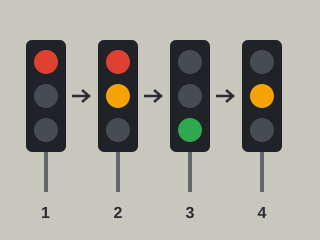 Traffic lightsRed, red and amber, green, amber: what each means.
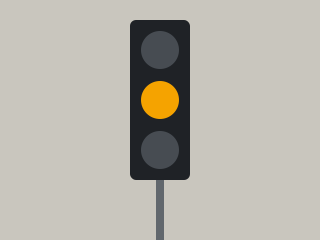 Amber traffic lightAmber means stop unless you cannot stop safely.
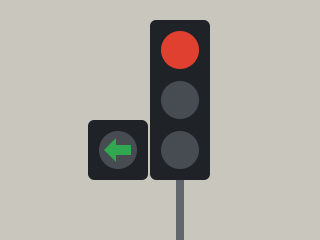 Green filter arrowGo only in the arrow’s direction, if clear.
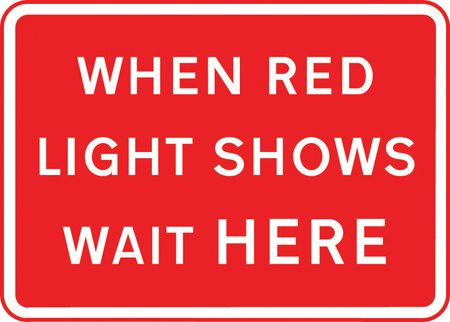 When red light shows wait here signAt temporary lights, stop here on red.
 Pedestrian crossing lightsRed means wait; steady green means cross with care.
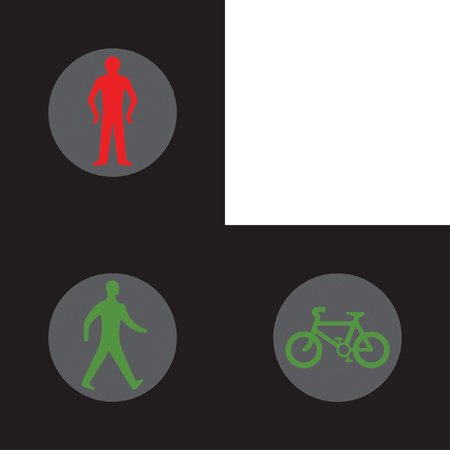 Toucan crossing lightsThese signals guide people walking and cycling.
Test yourself
The traffic lights in front of you show red and amber together. What should you do?
- Go, if the way is clear.
- Wait behind the stop line until green shows.
- Go on only if you have already crossed the stop line.
Show answer
B. Wait behind the stop line until green shows. Red and amber also means stop: do not pass the stop line until green shows (Know your traffic signs). Source: Know your traffic signs: traffic signals, GOV.UK; The Highway Code: light signals controlling traffic, GOV.UK
Every page here has its own quick question. For more practice, take the road signs quiz or the Highway Code quizzes.
More signs and markings
- Regulatory signs
- Speed limit signs
- Warning signs
- Level crossing signs
- Bus, cycle and tram signs
- Information signs
- Motorway signs and signals
- Road works signs
- Road markings
- All road signs
Sources
Checked on 5 November 2026 against the GOV.UK pages below.
- The Highway Code: light signals controlling traffic, GOV.UK
- The Highway Code, rule 175, GOV.UK
- The Highway Code, rule 176, GOV.UK
- Know your traffic signs: traffic signals, GOV.UK
- Know your traffic signs: pedestrian, cycle and equestrian crossings, GOV.UK
- Know your traffic signs: signs for road works and temporary situations, GOV.UK
Contains public sector information licensed under the Open Government Licence v3.0. Traffic sign images are Crown copyright, from the Department for Transport. Sources and image credits.