UK road sign shapes and colours
You can understand most UK road signs before you read a word, just from the shape and the colour.
This text was written with AI help, checked against GOV.UK and approved by Fri Vei AS. Last updated .
Last checked against the sources: · Report a mistake
Contents
Three basic shapes
Know your traffic signs, the government’s guide to UK signs, says there are three basic types of sign: signs that give orders, signs that warn and signs that give information.
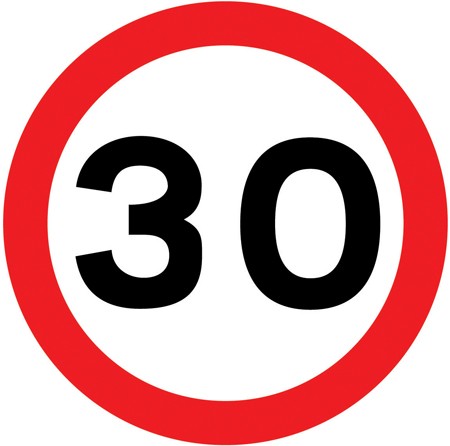
Circle: an order 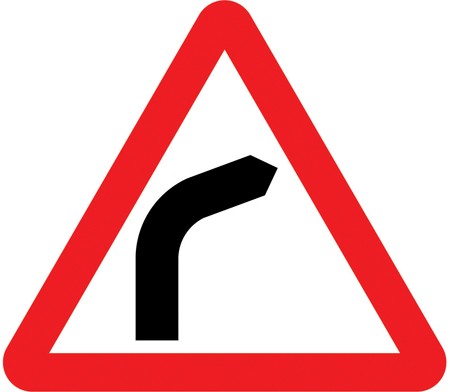
Triangle: a warning 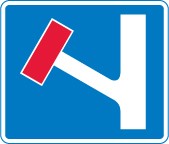
Rectangle: information
- Circles give orders. For example, a 30 in a red circle means you must not go faster than 30 mph.
- Triangles warn. They tell you about something ahead, such as a bend or a junction.
- Rectangles inform. They give directions and information.
Red circles and blue circles
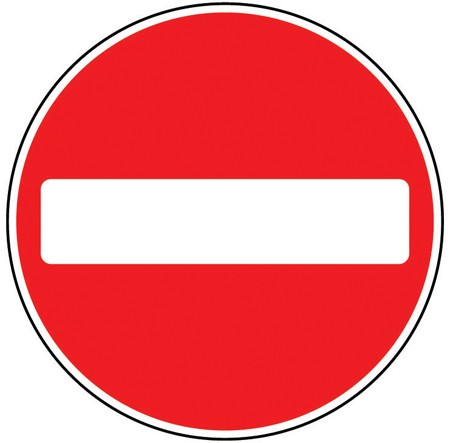
Red: you must not 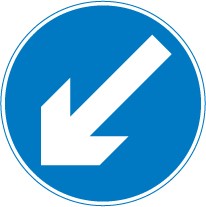
Blue: you must
- Red rings or circles tell you what you must not do, such as going over 30 mph.
- Blue circles generally tell you something you must do, such as “turn left”, or show a route only for certain traffic, such as buses and cycles.
The two big exceptions
A few signs break the shape and colour rules on purpose, so that they stand out. The best-known examples are STOP and GIVE WAY.
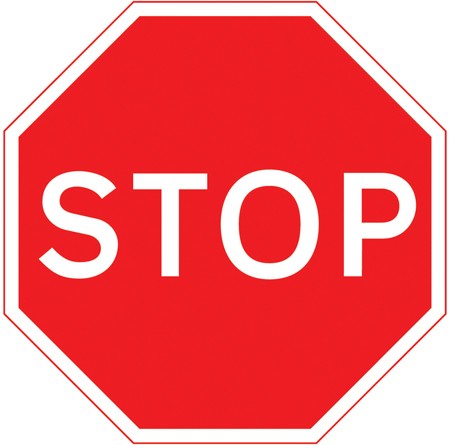
STOP: eight sides 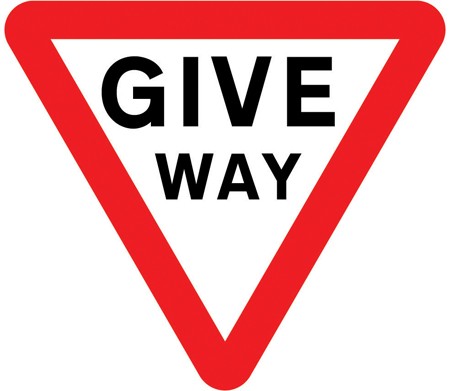
GIVE WAY: triangle pointing down
- STOP is eight-sided.
- GIVE WAY is a triangle pointing down. Even though it is a triangle, it gives an order: give way to traffic on the major road.
Colours on direction signs
| Colour | Where you see it |
|---|---|
| Blue | Motorways. Elsewhere, blue rectangles are used for information signs. |
| Green | Primary routes |
| White | Local or non-primary routes |
| Brown | Routes to tourist attractions |
A way to practise
When you’re a passenger, name each sign’s shape before you read it: order, warning or information. Then check what it actually says. It turns a car journey into a quiz.
Quick check
What do circular signs generally do?
- Give orders
- Warn
- Show tourist routes
Show answer
A. Give orders. Circles give orders. Source: Know your traffic signs: the signing system, GOV.UK (updated 5 December 2023)
Which sign is a triangle pointing down?
- STOP
- GIVE WAY
- National speed limit
Show answer
B. GIVE WAY. GIVE WAY is one of the exceptions to the shape rules. Source: Know your traffic signs: the signing system, GOV.UK (updated 5 December 2023)
What colour are direction signs on primary routes?
- Brown
- White
- Green
Show answer
C. Green. Primary routes have green backgrounds. Source: Know your traffic signs: the signing system, GOV.UK (updated 5 December 2023)
Sources
(2)
Contains public sector information licensed under the Open Government Licence v3.0.