Zigzag lines: what they mean
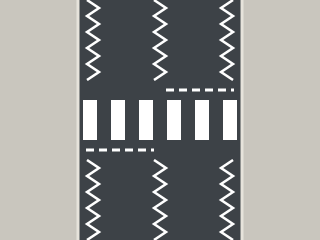
White zigzag lines at a crossing mean you must not stop or park in the area they mark, and must not overtake the moving vehicle nearest the crossing or the one stopped to give way to pedestrians. Yellow zigzags outside schools mark where you should not stop; with an upright sign, stopping is banned at the times shown.
What it means
Rule 191: you must not park on a crossing or in the area covered by the zigzag lines, and you must not overtake the moving vehicle nearest the crossing or the vehicle nearest the crossing that has stopped to give way to pedestrians. Know your traffic signs explains why: the markings help drivers and pedestrians see each other clearly.
Yellow zigzags outside schools, hospitals and fire, police or ambulance stations mark the length of road where you should not stop, not even to pick up or set down passengers. Where there is also an upright sign, stopping is banned during the times shown (Know your traffic signs).
Quick quiz
A car has stopped at a zebra crossing to let people cross. May you overtake it?
- Yes, if you can see clearly
- No
- Only on the left
Show answer
B. No. Rule 191: you must not overtake the vehicle nearest the crossing that has stopped to give way to pedestrians. Source: The Highway Code, rule 191, GOV.UK; The Highway Code, rule 240, GOV.UK; Know your traffic signs: pedestrian, cycle and equestrian crossings, GOV.UK; Know your traffic signs: on-street parking control signs and road markings, GOV.UK; The Highway Code: road markings, GOV.UK
Where you see it
On both sides of zebra, parallel and signal-controlled crossings. Yellow ones are painted outside schools and some emergency service entrances.
A common mistake
Stopping on white zigzags for a quick drop-off. Rule 240 says you must not stop or park on a pedestrian crossing, including the area marked by the zigzag lines.
Compare with
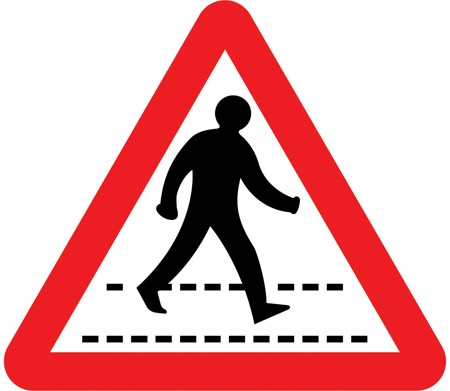 Pedestrian crossing signA zebra or parallel crossing is ahead.
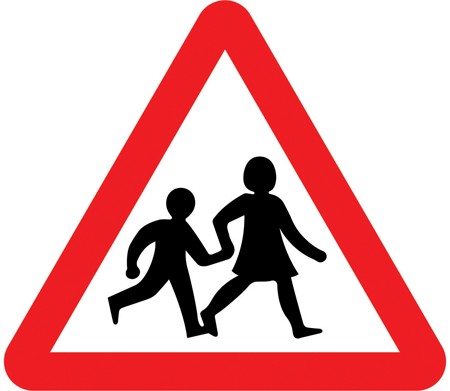 Children going to or from school signWatch for children near a school.
Want to test someone else? Play a road-sign quiz with friends and family.
Sources
(5)
Contains public sector information licensed under the Open Government Licence v3.0. The diagram at the top is our own simplified drawing, not to scale. The other sign images are Crown copyright, from the Department for Transport. Sources and image credits.