Traffic queues likely ahead sign: what it means
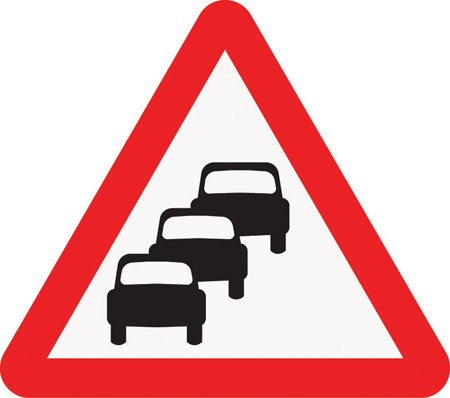
The triangle with a line of cars warns that traffic queues are likely ahead. Be ready to slow down or stop.
What does the traffic queues likely ahead sign mean?
Know your traffic signs lists it as “traffic queues likely ahead”. You may come round a bend and find traffic stopped.
Rule 126 says to leave enough space to pull up safely if the vehicle in front slows down or stops.
Quick quiz
What does the sign at the top of this page mean?
- Traffic may be queuing ahead.
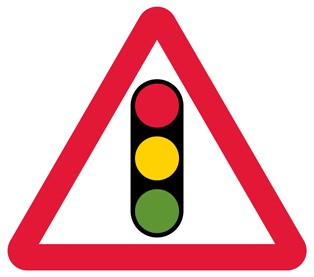
- Traffic lights are ahead.
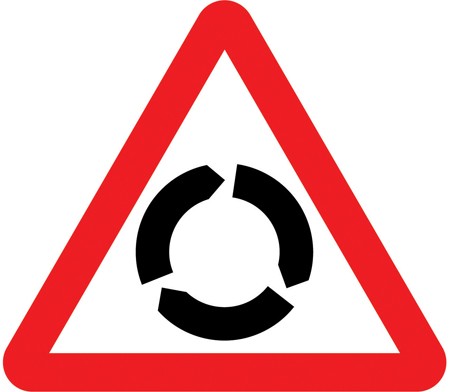
- A roundabout is ahead.
Show answer
A. Traffic may be queuing ahead. It warns that traffic queues are likely ahead (Know your traffic signs). Source: Know your traffic signs: warning signs, GOV.UK; The Highway Code, rule 126, GOV.UK; Traffic sign images, Department for Transport, GOV.UK
Where will you see it?
Before busy junctions, roundabouts and approaches to towns, often on fast roads.
What should you do?
Ease off, keep a bigger gap and watch for brake lights ahead.
What do people get wrong?
Following too closely. A sudden queue is a common cause of nose-to-tail crashes.
Common questions
How much gap should I leave?
The Highway Code, rule 126, says at least a two-second gap on high-speed roads, at least doubled on wet roads.
Is this sign always right?
It warns that queues are likely. There may be none, but be ready.
Compare with
Want to test someone else? Play a road-sign quiz with friends and family.
Sources
Checked on 4 November 2026 against Know your traffic signs (warning signs) and The Highway Code rule 126.
- Know your traffic signs: warning signs, GOV.UK
- The Highway Code, rule 126, GOV.UK
- Traffic sign images, Department for Transport, GOV.UK
Contains public sector information licensed under the Open Government Licence v3.0. Traffic sign images are Crown copyright, from the Department for Transport. Sources and image credits.