St Andrew's cross sign: what it means
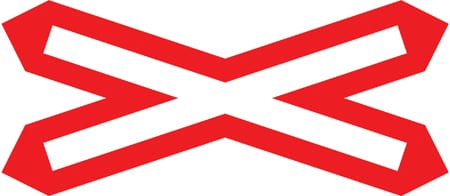
The St Andrew's cross marks a railway or tramway level crossing that has no gates or barriers. At an automatic crossing you must always stop when the light signals show.
What does the St Andrew’s cross sign mean?
Know your traffic signs says the St Andrew’s cross is used at level crossings where there are no gates or barriers. At automatic crossings you must always stop when the traffic light signals show. At crossings with give way signs, look out for trains and give way to them.
Quick quiz
What does the sign at the top of this page mean?
- A railway crossing with no gates or barriers is ahead.
- A railway crossing with gates or barriers is ahead.
- A level crossing with no gates or barriers.
Show answer
C. A level crossing with no gates or barriers. The St Andrew’s cross is used at level crossings without gates or barriers (Know your traffic signs). Source: Know your traffic signs: level crossing signs and signals, GOV.UK; The Highway Code, rule 291, GOV.UK; The Highway Code, rule 293, GOV.UK; Traffic sign images, Department for Transport, GOV.UK
Where will you see it?
At the crossing itself, beside the road at the stop line, often with red light signals. The triangle warning of a level crossing without a barrier comes before it.
What should you do?
Approach with care. Stop when the lights show and wait until they go off. Never drive onto the crossing until the road is clear on the other side, and never stop on it (Rule 291).
What do people get wrong?
Thinking that no barrier means no danger. A crossing without barriers relies on you to stop when the lights show, or to look and give way.
Common questions
Why is it called a St Andrew’s cross?
It is named after the X-shaped cross of St Andrew. On UK roads it marks a level crossing without gates or barriers.
What should I do if the lights keep flashing after a train has passed?
Wait. It means another train is coming (The Highway Code, rule 293).
Compare with
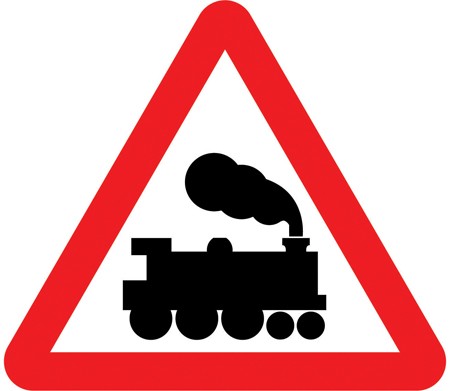 Level crossing without barrier signA railway crossing with no gates or barriers is ahead.
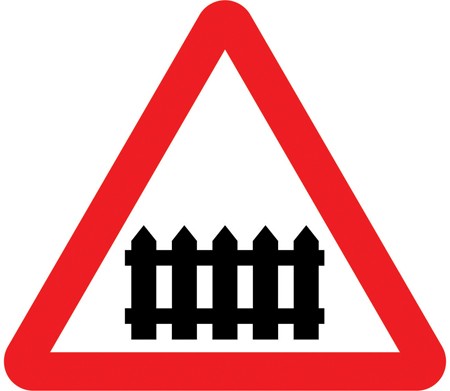 Level crossing with barrier signA railway crossing with gates or barriers is ahead.
Want to test someone else? Play a road-sign quiz with friends and family.
Sources
Checked on 3 November 2026 against Know your traffic signs (level crossing signs and signals) and The Highway Code rules 291 and 293.
- Know your traffic signs: level crossing signs and signals, GOV.UK
- The Highway Code, rule 291, GOV.UK
- The Highway Code, rule 293, GOV.UK
- Traffic sign images, Department for Transport, GOV.UK
Contains public sector information licensed under the Open Government Licence v3.0. Traffic sign images are Crown copyright, from the Department for Transport. Sources and image credits.