Quayside or river bank sign: what it means
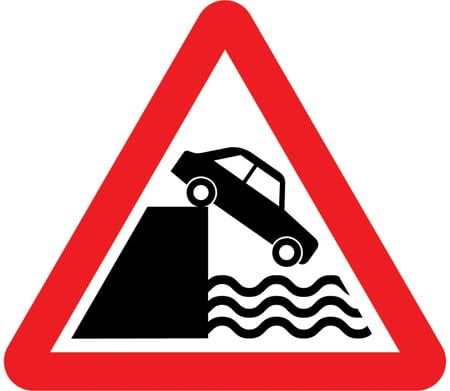
The quayside or river bank sign warns that the road ahead leads to a quay or the edge of a river, with water at the end. Drive slowly and be ready to stop.
What does the quayside or river bank sign mean?
Know your traffic signs calls it “quayside or river bank”. The road may end at the water with no barrier.
Quick quiz
What does the sign at the top of this page mean?
- The road leads to a quayside or river bank ahead.
- A hazard ahead; the plate says what it is.
- Rocks may fall or have fallen ahead.
Show answer
A. The road leads to a quayside or river bank ahead. A quayside or river bank ahead (Know your traffic signs). Source: Know your traffic signs: warning signs, GOV.UK; Traffic sign images, Department for Transport, GOV.UK
Where will you see it?
In harbours, at slipways, beside rivers and canals, and at ferry points.
What should you do?
Slow right down and keep looking for the edge. At night or in fog, the end of the road can be very hard to see.
What do people get wrong?
Following a sat nav straight on in the dark. Watch for the sign and the edge, not just the screen.
Common questions
Is there always a barrier at a quayside?
No. That is why the sign is there: the road may end at the water.
How is it different from the ford sign?
A ford is a place where the road crosses water. A quayside sign warns of an edge where the road ends.
Compare with
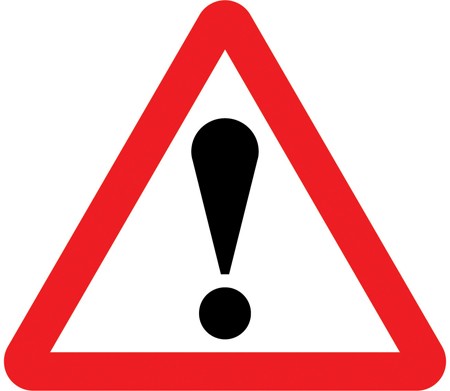 Other danger signA hazard ahead; the plate says what it is.
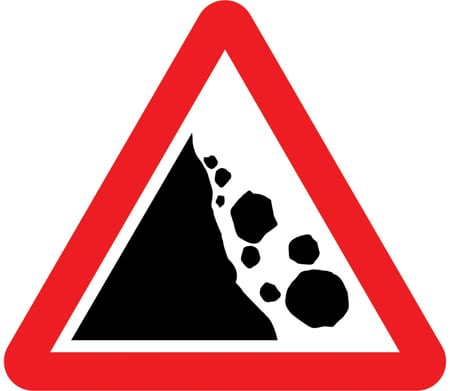 Falling rocks signRocks may fall or have fallen ahead.
Want to test someone else? Play a road-sign quiz with friends and family.
Sources
Checked on 3 November 2026 against Know your traffic signs (warning signs).
- Know your traffic signs: warning signs, GOV.UK
- Traffic sign images, Department for Transport, GOV.UK
Contains public sector information licensed under the Open Government Licence v3.0. Traffic sign images are Crown copyright, from the Department for Transport. Sources and image credits.