Hatched markings: what they mean
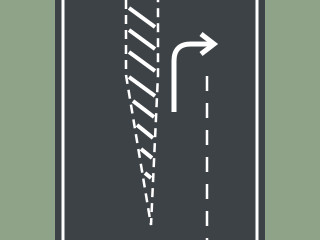
Hatched markings separate traffic lanes or protect traffic turning right. With a broken border, enter only if necessary and safe; with chevrons (V-shaped stripes) and a solid border, only in an emergency.
What it means
Rule 130: these areas separate traffic lanes or protect traffic turning right. If the area is bordered by a broken white line, you should not enter it unless it is necessary and you can see it is safe. If it is marked with chevrons and bordered by solid white lines, you must not enter it except in an emergency.
Know your traffic signs: chevrons with a solid border are used where slip roads leave and join motorways and many dual carriageways.
Quick quiz
An area of diagonal white stripes has a broken border. When may you drive on it?
- Whenever it saves time
- Only when necessary and safe
- Never, even in an emergency
Show answer
B. Only when necessary and safe. Rule 130: with a broken border, do not enter unless it is necessary and you can see it is safe. Source: The Highway Code, rule 130, GOV.UK; The Highway Code: road markings, GOV.UK; Know your traffic signs: road markings, GOV.UK
Where you see it
In the middle of the road at junctions, to protect right-turning traffic, on the approach to traffic islands, and at slip roads.
A common mistake
Using an empty hatched area as an overtaking lane. Check the markings first: chevrons with a solid white border must not be entered except in an emergency.
Compare with
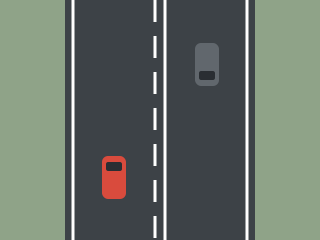 Double white linesThe line nearer to you decides if you may cross.
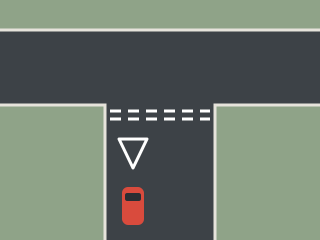 Give way linesDouble broken white lines across a junction.
Want to test someone else? Play a road-sign quiz with friends and family.
Sources
(3)
Contains public sector information licensed under the Open Government Licence v3.0. The diagram is our own simplified drawing, not to scale. Sources and image credits.