Agricultural vehicles sign: what it means
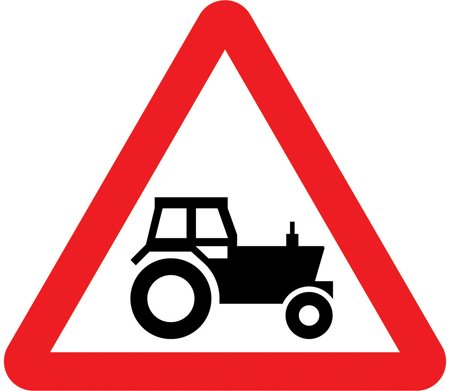
The tractor sign warns that agricultural vehicles are likely to be in the road ahead. They are slow and may be wide.
What does the agricultural vehicles sign mean?
Know your traffic signs lists it as “agricultural vehicles”. Rule 154 says to be prepared for slow-moving farm vehicles and mud on the road on country roads.
Quick quiz
What does the sign at the top of this page mean?
- Tractors and farm vehicles may be in the road.
- Horse-drawn vehicles may be in the road.
- The road surface ahead may be slippery.
Show answer
A. Tractors and farm vehicles may be in the road. It warns of agricultural vehicles in the road ahead (Know your traffic signs). Source: Know your traffic signs: warning signs, GOV.UK; The Highway Code, rule 154, GOV.UK; Traffic sign images, Department for Transport, GOV.UK
Where will you see it?
Near farm entrances and on country roads, especially at harvest time.
What should you do?
Slow down, expect a slow vehicle round the next bend and watch for mud on the road.
What do people get wrong?
Overtaking a tractor near a bend or junction. Wait until you can see that the road is clear.
Common questions
Why watch for mud?
Rule 154 warns of mud on country roads, which can make the surface slippery.
Do I have to stay behind a tractor?
Only overtake when it is safe and legal, with a clear view of the road ahead.
Compare with
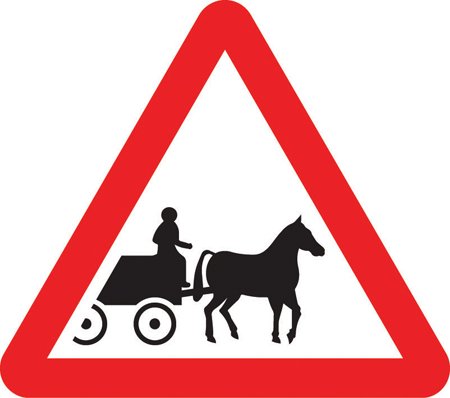 Horse-drawn vehicles signHorse-drawn vehicles may be in the road.
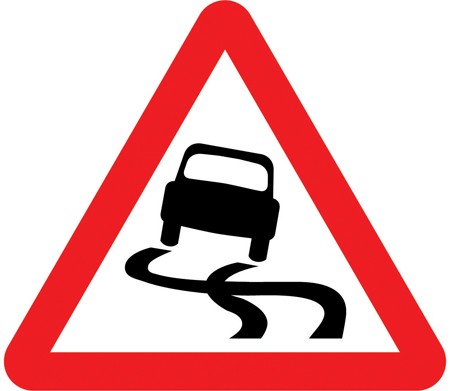 Slippery road signThe road surface ahead may be slippery.
Want to test someone else? Play a road-sign quiz with friends and family.
Sources
Checked on 4 November 2026 against Know your traffic signs (warning signs) and The Highway Code rule 154.
- Know your traffic signs: warning signs, GOV.UK
- The Highway Code, rule 154, GOV.UK
- Traffic sign images, Department for Transport, GOV.UK
Contains public sector information licensed under the Open Government Licence v3.0. Traffic sign images are Crown copyright, from the Department for Transport. Sources and image credits.