Dip sign: what it means
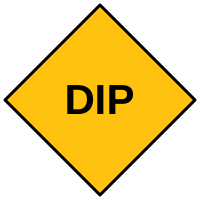
The DIP sign warns of a sharp drop in the road surface ahead. It can hide what is beyond it, and water may collect in it.
What does the DIP sign mean?
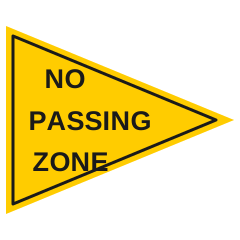
MUTCD Section 2C.26 says DIP signs should be used before a sharp depression in the road. It also says a short dip that could hide a vehicle should be treated as a no-passing zone on roads with a center line.
Quick quiz
What does the sign at the top of this page mean?
- A sharp rise in the road ahead.
- Passing is not allowed from here.
- A sharp dip in the road ahead.
Show answer
C. A sharp dip in the road ahead. A sharp depression in the road ahead (MUTCD Section 2C.26). Source: MUTCD 11th Edition, Chapter 2C, Warning Signs and Object Markers: Section 2C.26, FHWA; MUTCD 11th Edition, FHWA
Where will you see it?
On rural roads, at creek crossings and where the road drops sharply.
What should you do?
Slow down before the dip and do not pass. A vehicle may be hidden in it.
What do people get wrong?
Passing just before a dip. Section 2C.26 treats short dips that can hide a vehicle as no-passing zones.
Common questions
Why should I not pass near a dip?
A short dip can hide an oncoming vehicle. MUTCD Section 2C.26 says such dips should be treated as no-passing zones.
What is the difference between BUMP and DIP?
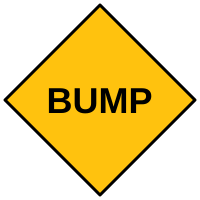
BUMP warns of a sharp rise, DIP of a sharp drop.
Compare with
Want to test someone else? Play a road-sign quiz with friends and family.
Sources
Checked on 3 November 2026 against the MUTCD 11th Edition (FHWA), Section 2C.26.
- MUTCD 11th Edition, Chapter 2C, Warning Signs and Object Markers: Section 2C.26, FHWA
- MUTCD 11th Edition, FHWA. FHWA lists the current version as the 11th Edition with Revision 1, dated December 2025
Sign pictures are our own simplified drawings of the MUTCD designs, which are in the public domain (MUTCD Section 1D.06). Sources and image credits.